

The Changing Procurement Landscape
Why Remanufactured Equipment Is the Smart Choice

Navigating a Changing Procurement Landscape
Laboratory procurement has always required a thoughtful balance across cost, performance, and reliability. Over the past year, that balance has become more difficult to maintain. Tariff increases, shipping volatility, and extended lead times have made importing new equipment far more expensive and much less predictable.
As laboratories move through 2026, many pathology and histology teams are reevaluating how they source essential instruments and manage procurement planning in a more volatile market.
One of the most effective ways labs are regaining stability is by turning to high-quality remanufactured equipment. When remanufacturing takes place in the United States under validated quality systems, laboratories gain access to like-new performance without the financial or logistical uncertainty tied to overseas imports. Before choosing this path, it is important to understand how current market conditions are affecting the landscape and why remanufactured equipment offers a meaningful advantage.
How Tariffs and Supply Disruptions Are Affecting Labs
The tariff structure introduced over the past year has had a clear impact on the cost and availability of laboratory instruments. Duties applied to equipment in several categories have increased the final purchase price, and many manufacturers have passed these costs along to customers. These increases compound with elevated freight charges, slower customs clearance, and ongoing global supply chain delays.
For many labs, the result is a procurement environment where prices shift quickly and equipment that once shipped within weeks may now take considerably longer to arrive. Replacement cycles, annual budget planning, and maintenance schedules all become more challenging when the cost and timing of new equipment fluctuate. These variables place additional strain on laboratories that are already working under increasing diagnostic and staffing pressures.
Why Remanufactured Equipment Offers a More Stable Path in 2026
Remanufactured equipment avoids much of the current volatility because it is rebuilt and distributed within the United States. Since these instruments do not enter the country as new imports, they are not affected by shifting tariff schedules, international freight surcharges, or customs delays. This creates a level of price stability and delivery consistency that has become increasingly valuable to labs.
Quality remanufacturing is a controlled and thorough process. An instrument is fully disassembled, cleaned, rebuilt with replacement components, and tested to confirm it performs to the original manufacturer's specifications. The final goal is to return the instrument to like-new condition with verified accuracy, reliability, and a warranty.
Domestic remanufacturing also shortens turnaround times. Instead of working through congested ports or unpredictable international carriers, labs gain access to equipment that is already in the United States and supported by technicians who regularly work with widely used histology and pathology models.
Remanufactured vs. Refurbished: Why the Difference Matters
Before making procurement decisions, it is important to understand the difference between remanufactured and refurbished equipment, since the terms are often used interchangeably but describe two very different processes.
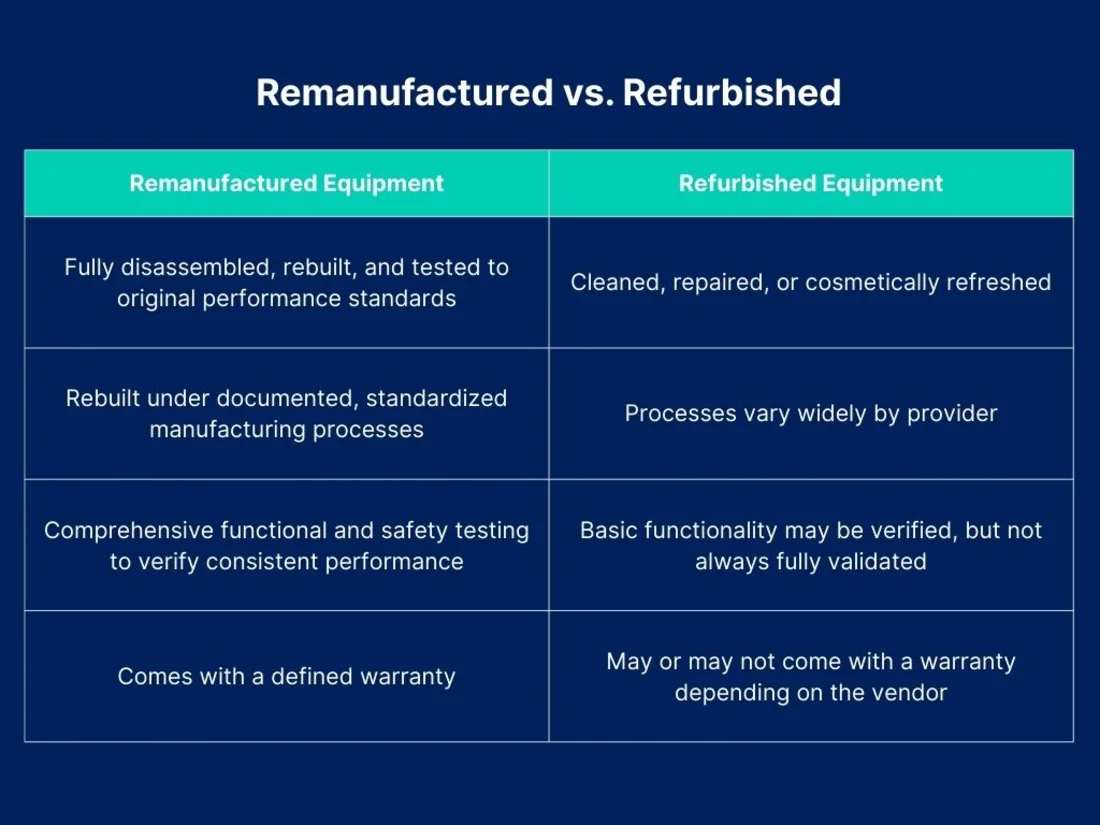
For labs making high-stakes equipment decisions, this distinction determines not only operational confidence but also financial predictability.
Why It Matters in 2026
The pressures that reshaped procurement last year continue to influence the laboratory equipment market. Tariff schedules remain uncertain, supply chain bottlenecks persist, and import costs remain elevated across several equipment categories. Many laboratories are operating in an environment where timelines and pricing require closer evaluation and flexibility.
Remanufactured equipment provides a way to regain control. It offers predictable pricing, verified performance, and reliable access without the risks associated with international sourcing. As teams continue managing procurement decisions in 2026, remanufactured instruments can support both budget stability and consistent diagnostic performance.

Get Expert Guidance for Your Lab
Whether you need service, equipment, or planning support, our team is ready to help you find the right solution for your lab.