

Understanding the Value of Remanufactured Equipment in Today's Lab Economy
Ongoing tariff changes and global supply challenges have reshaped how laboratories plan and purchase equipment. With many imported instruments now facing longer lead times and higher costs, lab managers are rethinking their sourcing strategies. One option gaining attention is remanufactured equipment, a solution that delivers reliable performance, compliance assurance, and financial flexibility without the added impact of import duties.
But not all "used" equipment is created equal. Understanding the difference between refurbished and remanufactured is essential for protecting both operational quality and long-term value.
Understanding the Difference: Remanufactured vs. Refurbished Equipment
The words refurbished and remanufactured are often used interchangeably, but in laboratory procurement, the distinction is critical. It affects not only quality and reliability but also how equipment is treated for warranties and tax depreciation.
Refurbished Equipment
Refurbished equipment is pre-owned equipment where only the necessary repairs are made so that the equipment is functional.
The goal of refurbishment is to make the instrument work again, not necessarily to make it perform like new. For example, a refurbished microtome or cryostat might operate well enough for basic tasks, but it may not meet OEM tolerances for precision, temperature stability, or reliability over time.
Under FDA guidance, refurbishment is considered servicing, not manufacturing. The device's regulatory classification remains unchanged, and the process is not subject to the manufacturer-level quality controls required for new production.
- Performance verification is limited.
- Warranties are often short-term (30 to 90 days) if offered at all.
Refurbished equipment can extend usability temporarily, but it does not provide long-term reliability, warranty protection, or renewed value for depreciation.
Remanufactured Equipment
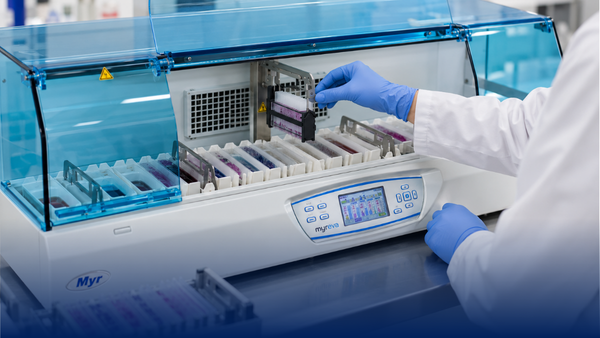
Remanufacturing is a complete rebuild designed to restore an instrument to as close to new condition. The process involves full disassembly, deep cleaning, replacement of critical components, reassembly, and testing to original OEM specifications.
The defining characteristic of remanufacturing is that the finished product performs to the same standards as when it was first manufactured. It is not merely functional; it is tested for accuracy, safety, and reliability.
Under FDA Quality System Regulations (21 CFR Part 820), remanufacturing is classified as a manufacturing activity. That means:
- Every critical system (mechanical, electrical, and software) is rebuilt and verified.
- The process follows design controls and protocols similar to new production.
- The final product carries a warranty comparable to a new instrument (often 6 to 12 months).
From a trade standpoint, remanufacturing has another major benefit. Under the United States, Mexico, Canada Agreement (USMCA), a remanufactured good that has been rebuilt and tested to perform like new, and carries a warranty similar to a new product, is recognized as a new good of that country.
If that process occurs in the U.S. or another USMCA nation, the product's country of origin resets. In other words, a remanufactured tissue processor rebuilt in Ohio is legally a U.S.-made product and is not subject to the import tariffs that currently impact new or refurbished instruments sourced overseas.
Why the Difference Matters
The distinction between refurbished and remanufactured equipment is about more than appearance or basic function. It influences compliance, economics, and long-term reliability.
1. Quality and Warranty - Remanufactured instruments meet OEM specifications and include a warranty. Refurbished equipment is only tested to function, not to perform at OEM specifications, and may not come with a warranty.
2. Tariff Relief - Remanufacturing creates a new domestic origin. By purchasing from a U.S.-based remanufacturer, labs avoid import duties that can add 25 percent or more to the cost of new foreign-made instruments. Refurbished imports, even if serviced elsewhere, remain tariff-eligible.
3. Depreciation and Financial Value - Remanufactured instruments are treated as newly manufactured goods, making them eligible for re-depreciation under IRS rules. This allows labs to claim new tax deductions on assets that have been fully rebuilt and placed back in service. Combined with lower acquisition costs (typically 30 to 40 percent less than new) the total savings are substantial.
4. Supply Stability - Remanufactured equipment is often available faster than new imports. Domestic rebuilds rely on parts already in the U.S. supply chain, avoiding months-long shipping delays and helping labs maintain quality and compliance without extended downtime.
The Bottom Line
Refurbished equipment can fill a short-term need, but remanufactured equipment delivers long-term value. It provides the reliability of new instruments, the assurance of validated quality, and the financial benefits of renewed depreciation, all while avoiding the volatility of overseas supply and tariff costs.
For labs balancing operational continuity with fiscal responsibility, remanufactured instruments offer a clear path forward:
- Like-new performance verified to OEM standards
- Extended warranty protection
- Tariff-free domestic origin
- Re-depreciation eligibility for renewed tax benefits
Choosing remanufactured means protecting both your lab's performance and its financial health.
— Wendy Mascio, Founder, Medical Equipment Source

Get Expert Guidance for Your Lab
Whether you need service, equipment, or planning support, our team is ready to help you find the right solution for your lab.